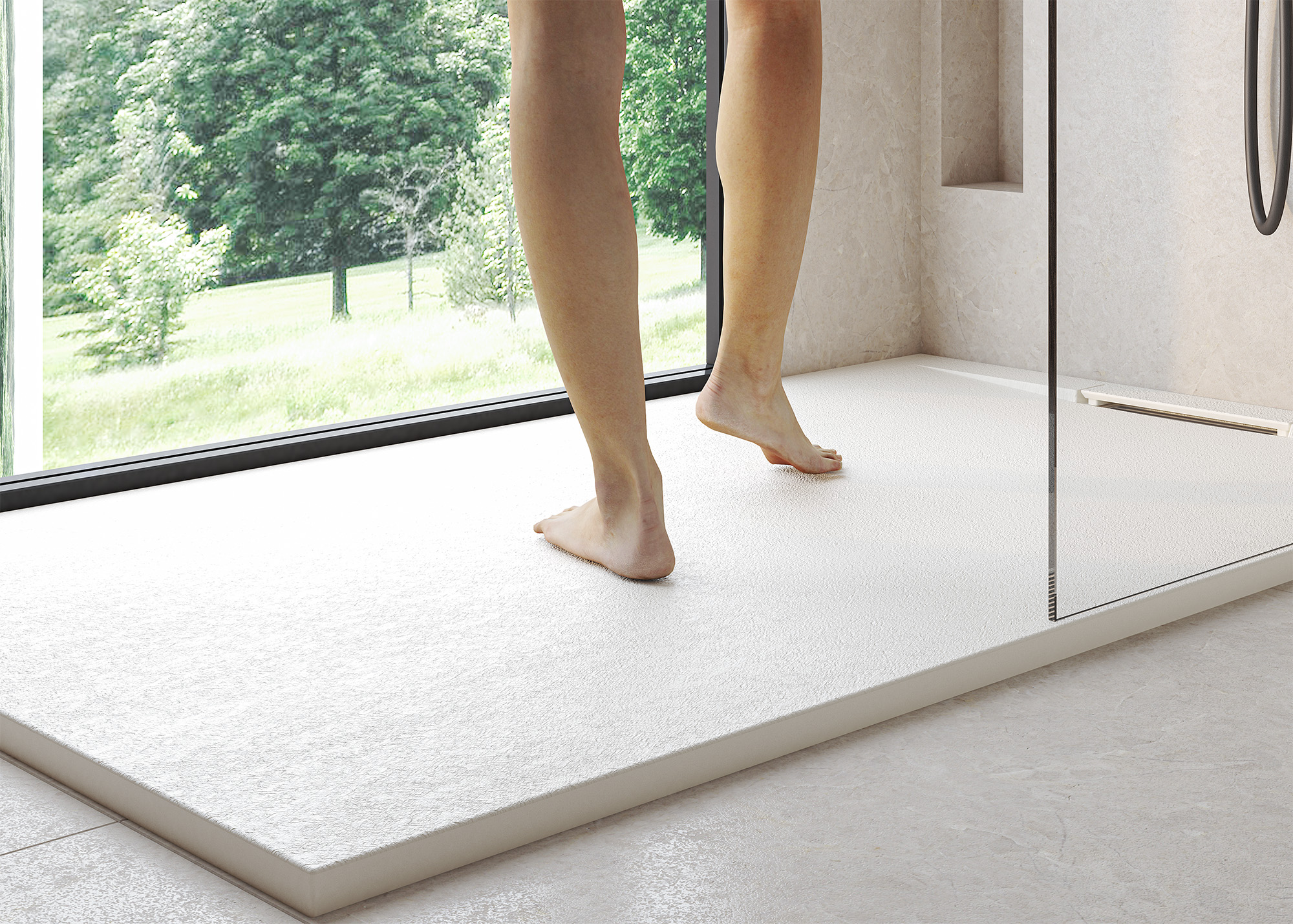
Beyond aesthetics: how to choose bathroom surfaces
In bathroom design, surfaces have a direct influence on how a space is perceived and experienced. They do more than define its appearance: they also determine how light interacts with the space, how materials feel to the touch and how they perform in response to the demands of everyday use.
For this reason, choosing between a smooth surface, a stone-inspired texture or a more pronounced relief should never be an isolated decision. Each option brings different qualities and can help reinforce both the identity of the space and the way we experience it.
The surface therefore becomes a design tool in which appearance, touch and use form part of the same decision.
The surface is part of the design
The finish of a product is as much a part of its design as its dimensions, geometry or colour. The choice of surface can alter the way we perceive a volume, its relationship with the surrounding materials and even its presence within the space.
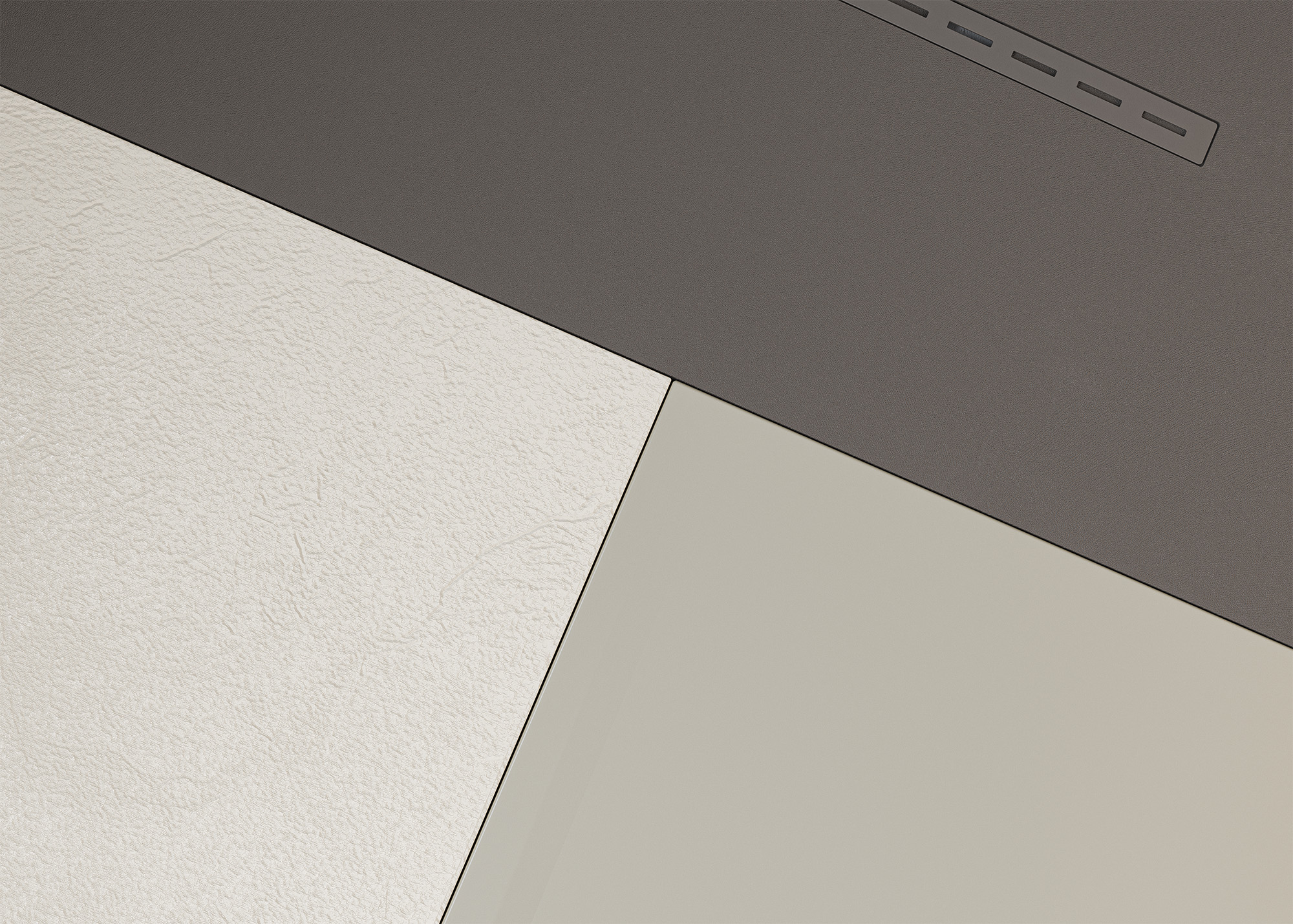
A smooth surface, for example, can reinforce the definition of forms and create a more uniform perception of the volume. A textured surface, on the other hand, introduces relief, depth and variations in the way light falls across it.
Considering the surface from the earliest stages of the project therefore makes it possible to establish a more coherent relationship between shower trays, bathtubs, countertops, wall and floor finishes, and the other elements within the bathroom.
Smooth or textured: two ways of understanding space
There is no single surface suitable for every project. Smooth and textured finishes create different design languages, and the choice will depend both on the aesthetic intention and on the requirements of each application.
Smooth surfaces bring uniformity and allow geometry and colour to take on greater prominence. They work particularly well when the aim is to create a clean, refined composition or to establish a dialogue with other elements defined by simple lines.
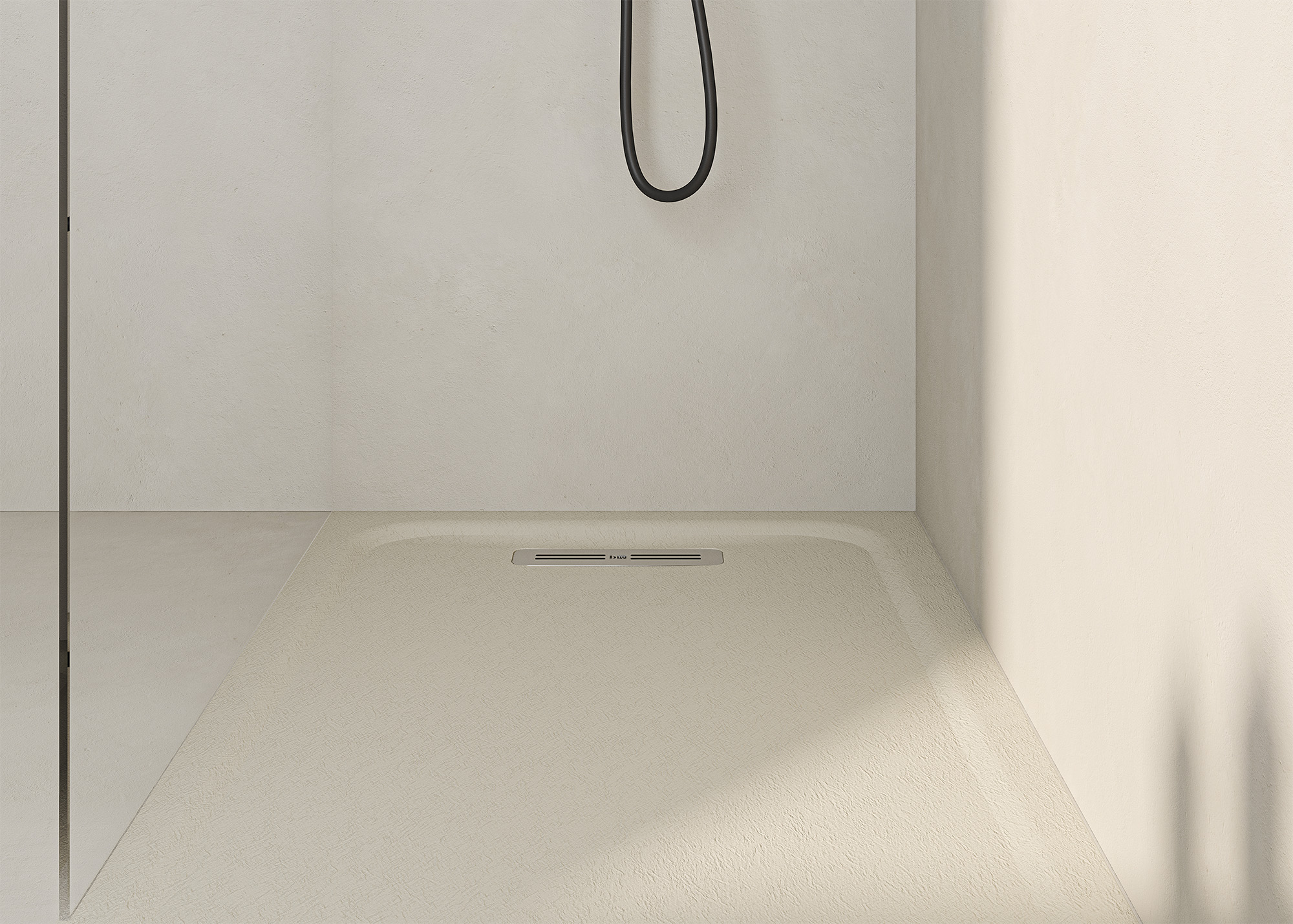
Textured surfaces, by contrast, introduce greater nuance. Relief interacts with light, creating subtle variations in shadow that bring depth and visual richness to the material.
Even within the same colour palette, changing the texture can significantly transform the way a surface is perceived.
When nature inspires the surface
Stone, slate and other mineral materials continue to provide a rich source of inspiration for bathroom design. Their appeal lies not simply in reproducing their appearance, but in reinterpreting the irregularities, reliefs and nuances that characterise natural materials.
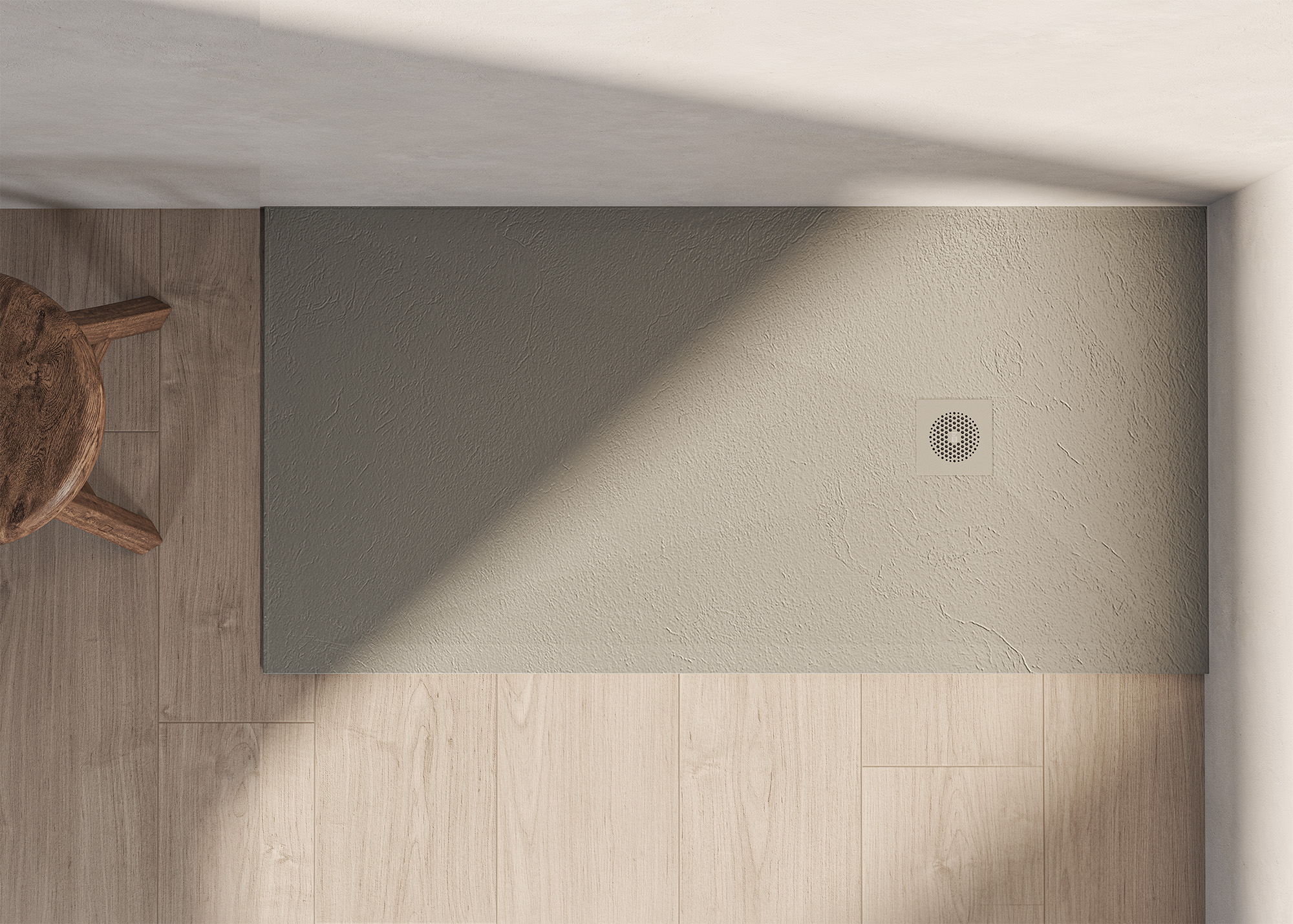
Applied to elements such as shower trays, these references introduce a sense of materiality into the space without the need for strong contrasts.
Texture can therefore become a way of adding character while maintaining a balanced composition. Combined with earth, sand and stone tones or deeper colour palettes, it also creates a natural dialogue with wood, ceramics and other materials commonly used in interior design projects.
Touch is also part of the experience
The bathroom differs from other spaces in one important respect: our relationship with its materials is particularly direct. Contact with water, surfaces and the different elements within the space gives touch a particular significance.
The experience of a surface therefore goes beyond the visual.
The smoothness of a finish, the presence of relief or the sensation a material creates when touched all form part of the way we experience the space. These are qualities that are difficult to appreciate through an image alone, yet become especially relevant when a product forms part of everyday architecture.
Designing from this perspective means considering not only how we want a surface to look, but also how we want it to feel.
Surfaces with purpose
The variety of available finishes makes it possible to adapt the same product to very different architectural languages. A surface can blend discreetly into the overall composition, establish a dialogue with other materials or become one of the most distinctive elements within the space.
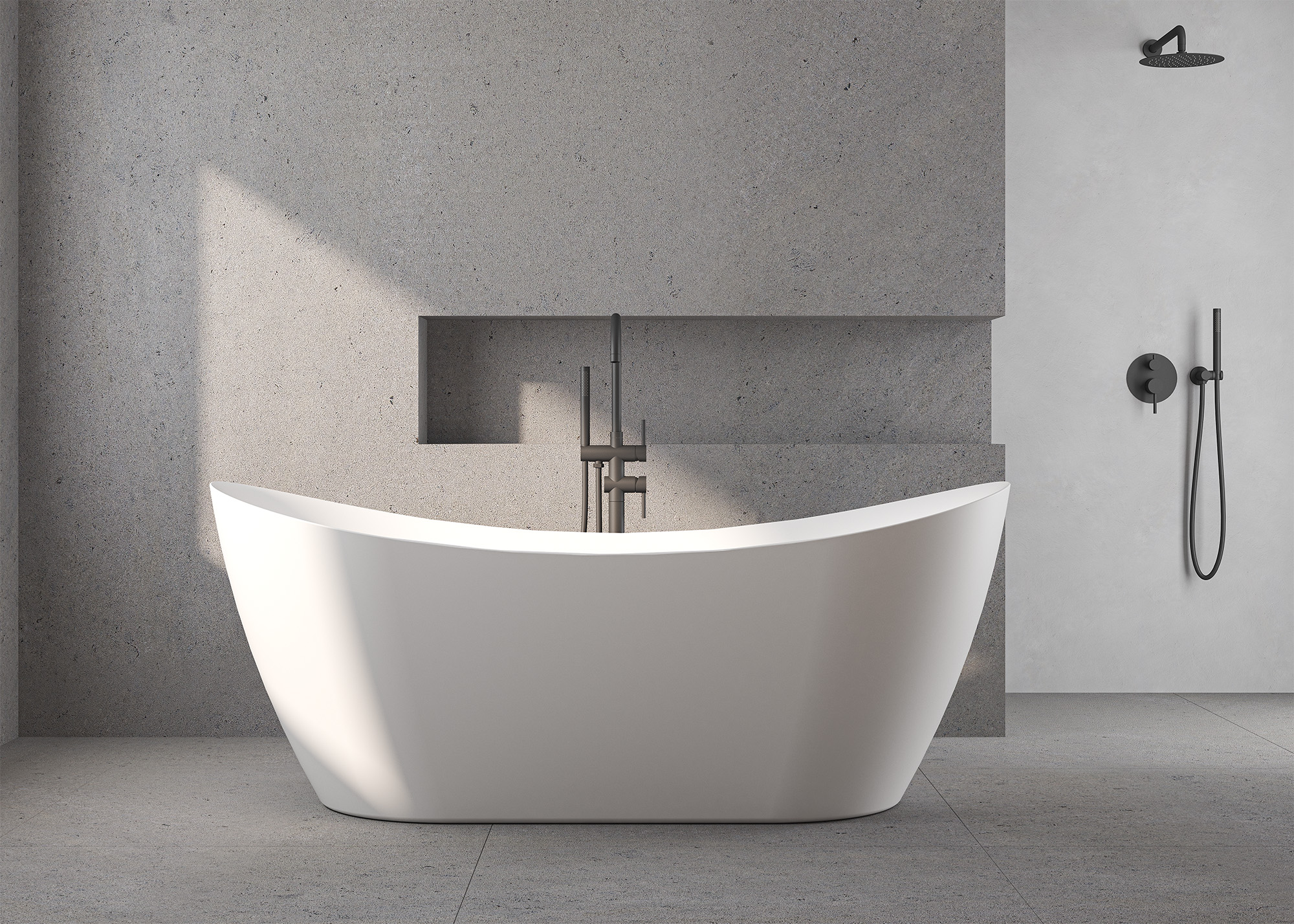
Colour further extends these possibilities. The ability to work with different finishes and customise products in RAL colours broadens the options for integrating shower trays, bathtubs and countertops into the design language of each project.
Choosing a surface means considering its appearance, the sensations it conveys and the way it performs in use as interconnected factors. Each of these decisions helps define both the identity of the space and the experience of those who use it.
Because a surface does more than define how we see the bathroom. It also shapes how we touch it, how we use it and how we experience it every day.