Criteria for the correct installation of a resin shower tray
The correct installation of a resin shower tray is a determining factor in ensuring its performance, durability and watertightness over time. Beyond the choice of model or finish, the installation phase must be resolved at project level, taking into account constructive, regulatory and on-site coordination criteria.
This article outlines the key technical principles required to achieve a correct installation, aligned with industry best practices and the usual requirements of residential and contract projects.
Prior definition of the installation type
Before starting the works, it is essential to define the type of shower tray installation, as this decision directly affects the execution of the support, the routing of drainage systems and the correct resolution of overall watertightness.
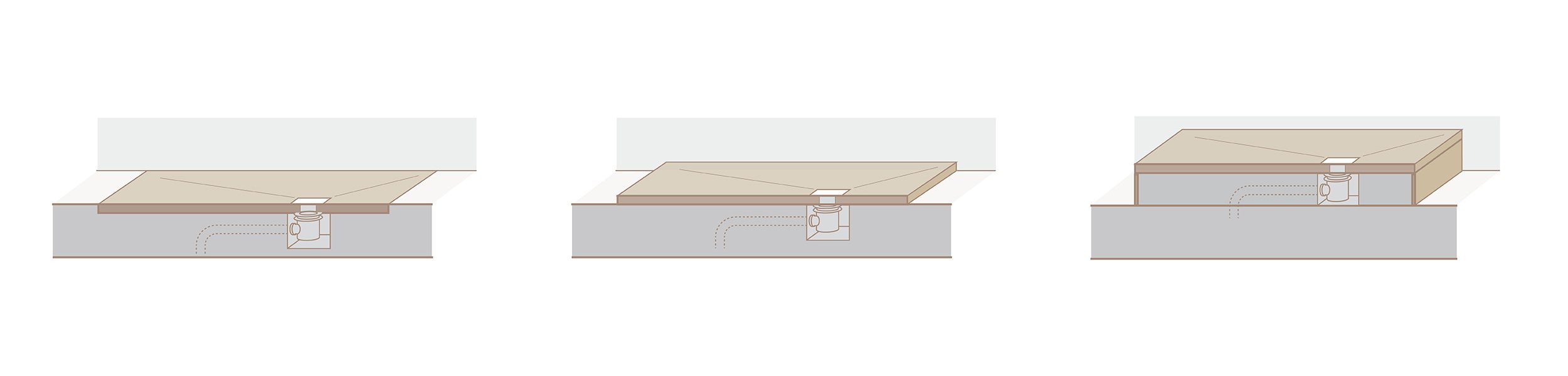
Depending on the existing substrate conditions and the project approach, the following solutions may be considered:
Recessed installation: requires approximately 9 cm of floor depth to accommodate the built-in waste. In these solutions, the waterproofing system of the substrate must be resolved beforehand and form part of the bathroom’s constructive solution, especially in flush-to-floor installations.
Installation on finished floor: the tray is placed directly on the finished floor or can be installed prior to floor tiling, provided that the support surface is completely uniform, stable and perfectly level, resolving drainage without the need for structural recesses.
Raised installation: when it is not possible to recess the waste, the tray is raised on a built masonry plinth or pedestal, allowing correct accommodation of the drainage system while maintaining the required gradients without compromising overall functionality.
The choice of system must respond to the technical feasibility of the existing substrate and the project requirements, avoiding forced solutions at advanced stages of the works that may compromise durability or correct performance.
Preliminary drainage check
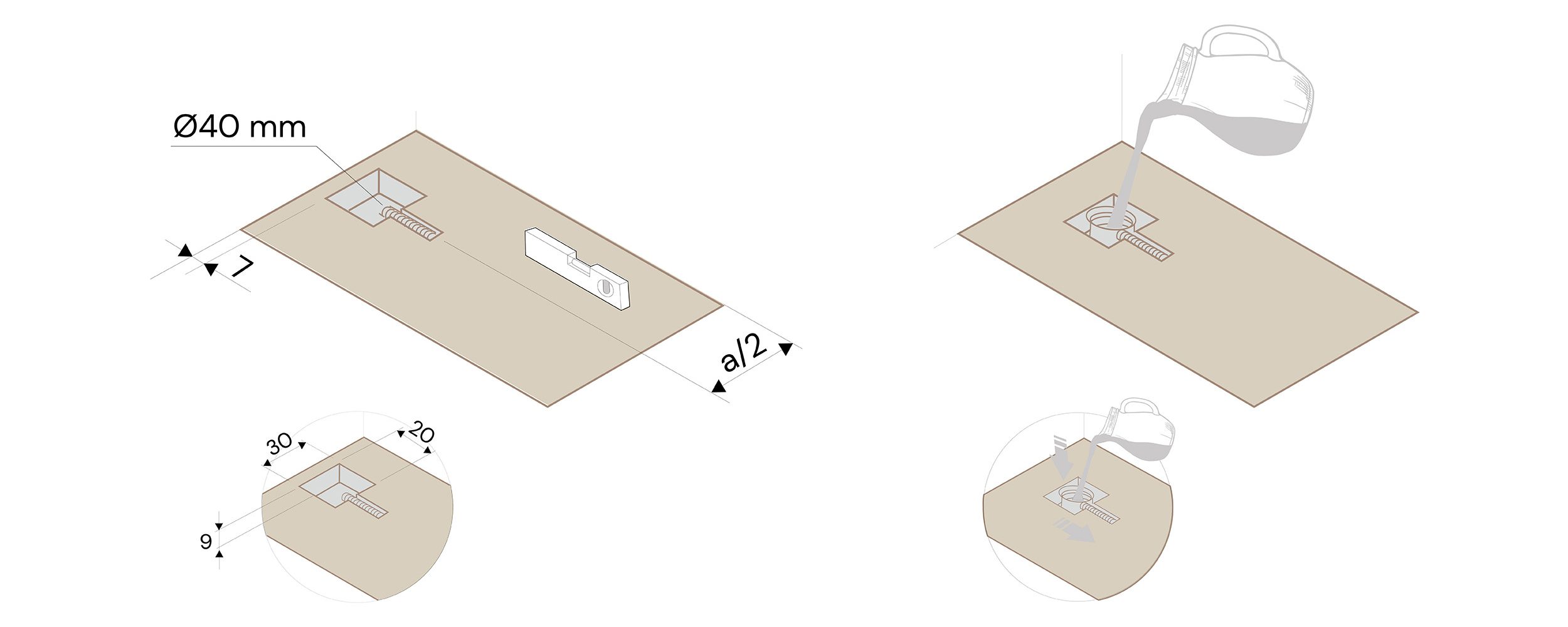
Before proceeding with the final installation of the shower tray, it is essential to check the correct operation of the drainage system. This prior verification makes it possible to detect potential blockages, alignment issues or insufficient gradients before the tray is installed.
Carrying out this check at an early stage avoids later interventions on an already installed tray and ensures proper drainage performance once installation is complete.
Continuous support and substrate preparation
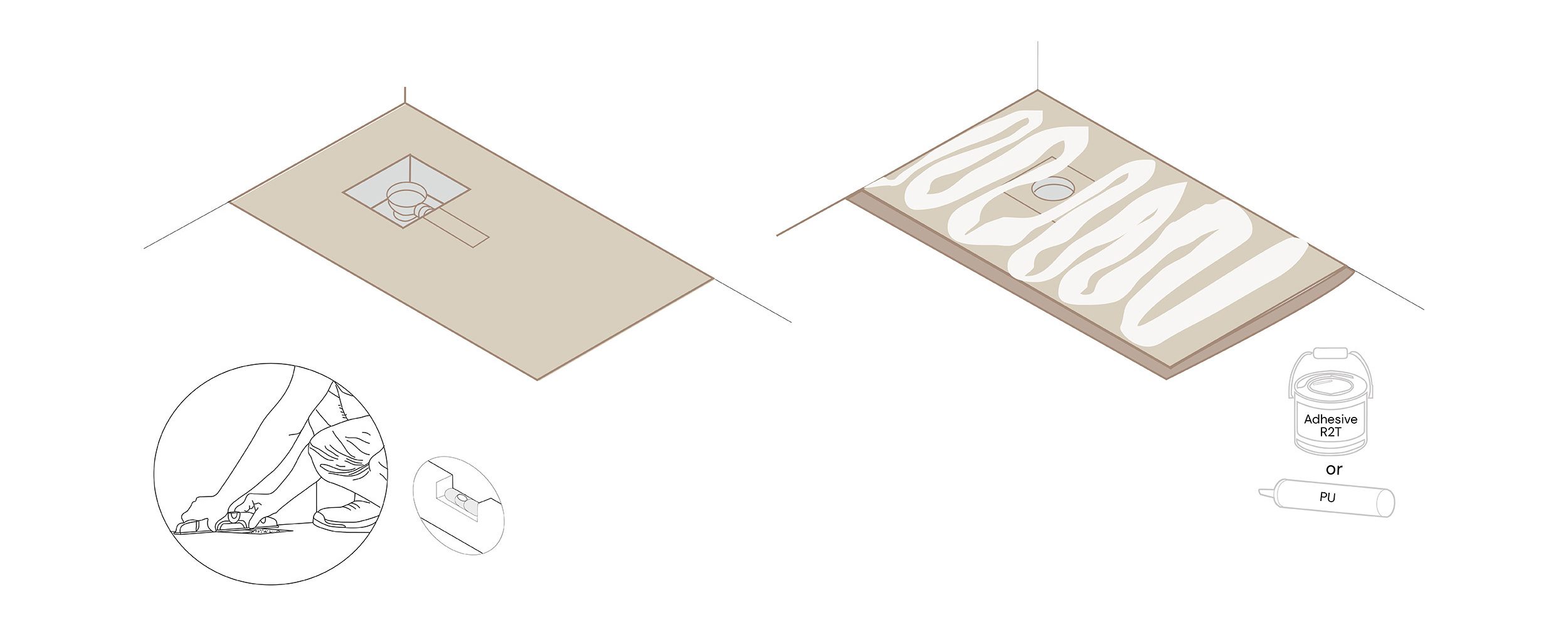
To guarantee correct mechanical performance, the resin shower tray must be continuously supported across its entire surface on a firm, stable and perfectly levelled substrate.
The support base must be flat, uniform and free of discontinuities, avoiding irregularities, mortar residues or local unevenness that could cause partial support. This aspect is particularly critical in installations carried out prior to the final floor finish, where any deviation in substrate flatness is directly transferred to the tray.
The use of isolated support points or cement-based adhesives (C-type adhesives, tile adhesives, etc.) as fixing systems is not recommended under any circumstances. These materials do not ensure continuous structural support and may generate stress, vibration or deformation during use, affecting both comfort and long-term durability.
Gradient and water evacuation
Correct water evacuation depends both on the design of the tray and on the routing of the drainage pipework. According to the Spanish Building Code CTE DB-HS (Health), drainage pipes must have a minimum gradient of 2%, ensuring gravity-driven water flow and preventing stagnation.
This requirement must be respected regardless of the installation type (recessed, floor-mounted or raised), paying particular attention to:
alignment between the tray waste and the drainage pipe
absence of counter-slopes
correct fixing of the pipework to prevent subsequent movement
Watertightness and perimeter sealing
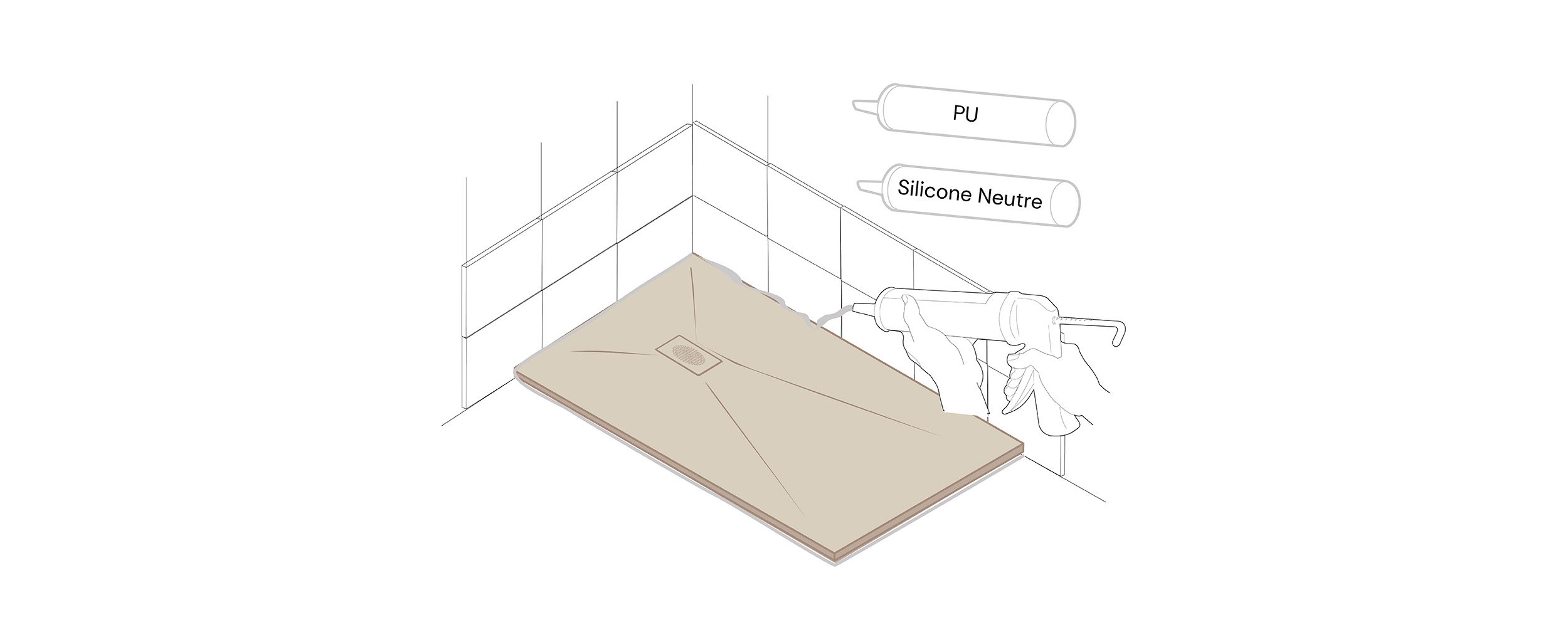
Overall watertightness does not depend solely on the shower tray itself, but on how junctions with adjacent surfaces are resolved. Proper execution of perimeter sealing is essential to absorb minor movements and prevent long-term leaks.
Watertight sealing must be carried out using non-acetic silicone, suitable for wet environments and compatible with the materials in contact. This type of silicone maintains elasticity over time and prevents chemical reactions that could affect both the tray and surrounding finishes.
The use of rigid solutions or unsuitable sealants should be avoided, as they may crack or lose adhesion, especially in areas subject to temperature changes and continuous use.
Installation as part of the project
Correctly installing a resin shower tray is not an isolated operation, but a decision that must be integrated into the project from the earliest stages, forming part of the constructive definition of the bathroom space. Defining the installation type, allowing for drainage space and coordinating trades makes it possible to resolve the bathroom in a clean, durable and technically sound manner.
A rigorous approach at this stage prevents future issues and ensures that the shower tray performs as intended: a technical surface fully integrated into the architectural ensemble of the bathroom.