
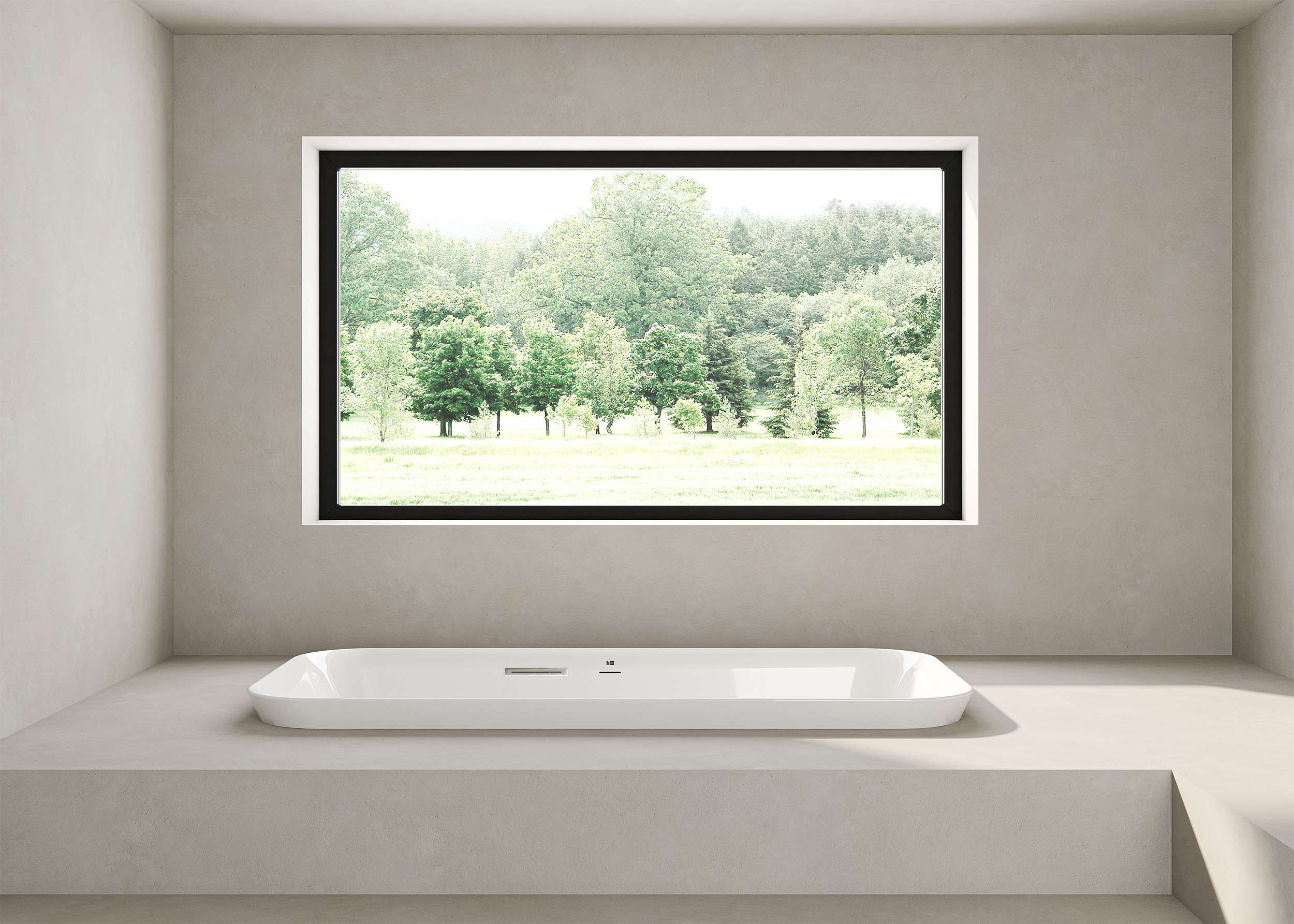
The bathtub as an architectural element
For many years, bathroom design followed an essentially functional logic: first the layout was defined, then the sanitaryware was incorporated, and finally the materials and finishes were selected. Today, that approach to design has evolved.
In contemporary architecture, certain elements are no longer regarded as simple functional components, but as the starting point of the project.
Beyond its function, the bathtub’s position, proportions, materiality and relationship with light can determine both the organisation of the space and the way it is perceived. When this happens, the bathtub ceases to be just another fixture and becomes an element capable of shaping the architecture of the bathroom.
Integrating the bathtub transforms the space
Choosing a bathtub goes far beyond selecting a particular shape or size; each typology reflects a different way of understanding and inhabiting the space.
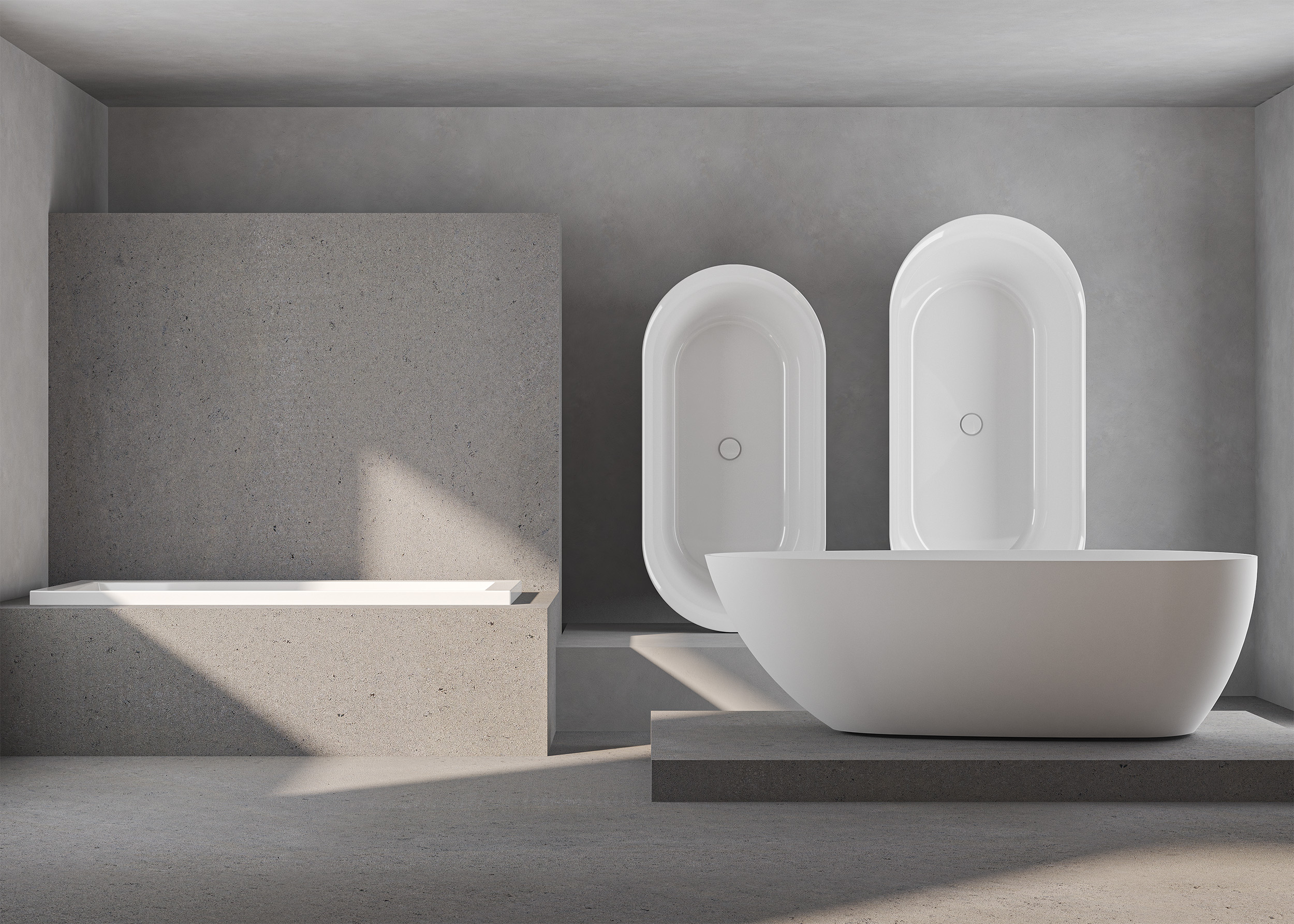
- Freestanding bathtubs are conceived as sculptural pieces that require space around them to express their full potential. They are ideal when the aim is for the bathtub to become the focal point and visually organise the room.
- Back-to-wall freestanding bathtubs retain that strong visual presence while allowing a more efficient layout in projects where space is more limited or where greater optimisation is required without compromising design.
- Built-in bathtubs remain an entirely relevant solution. Their ability to integrate seamlessly with flooring, wall coverings or surrounding structures reinforces the material continuity of the project and creates clean, timeless compositions.
- Finally, double bathtubs, designed for shared bathing, respond to a different way of experiencing the space, where the user experience itself influences the design of the bathroom.
The language of form
The geometry of a bathtub is far more than an aesthetic decision. Curved lines soften the perception of the space and encourage more organic compositions, while straight lines and more defined volumes provide order, balance and a stronger architectural presence.
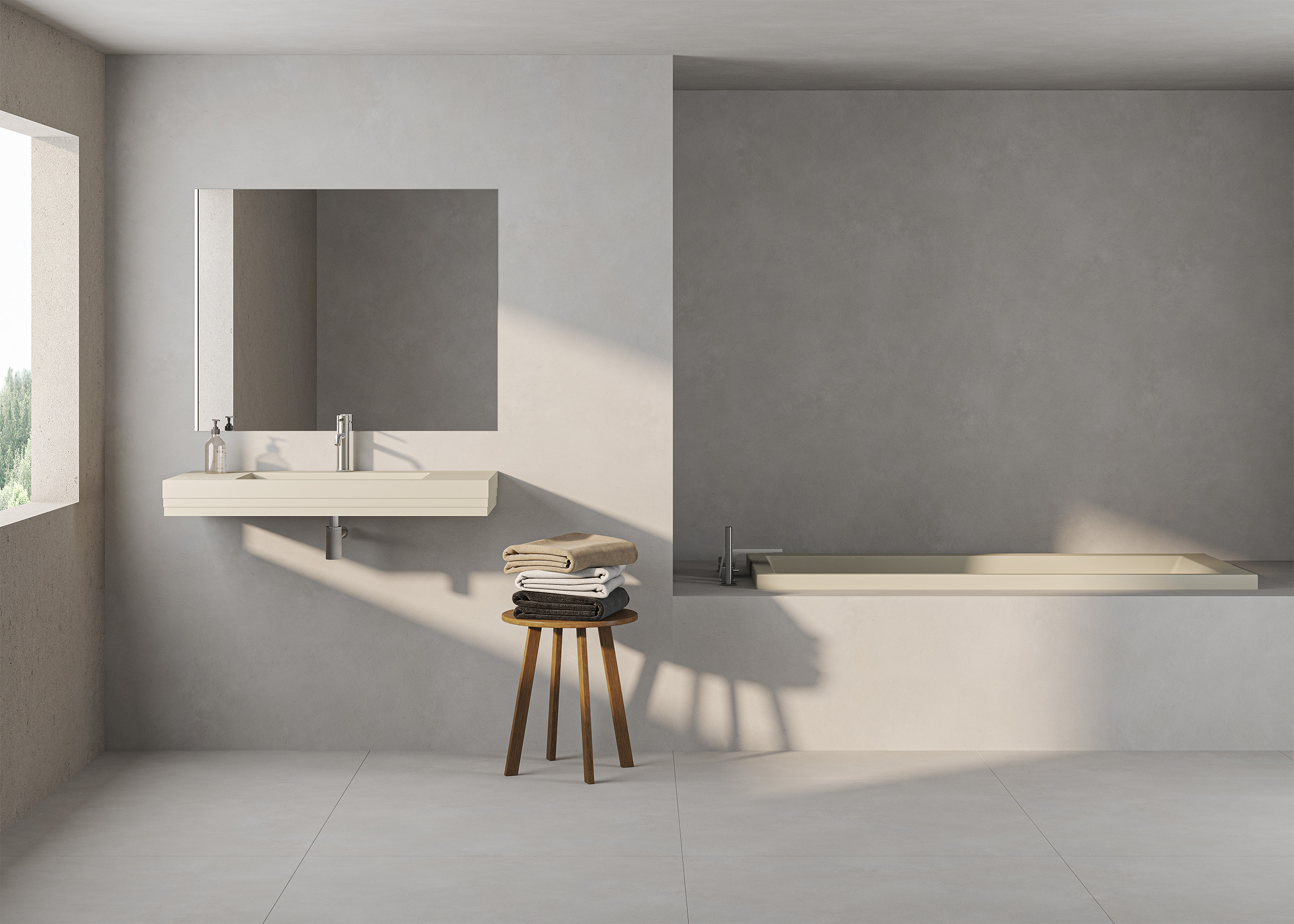
The choice between one or the other should always respond to the language of the project and to the relationship the bathtub establishes with the other elements in the bathroom. Washbasins, countertops, wall finishes and lighting all form part of a composition in which every element contributes to building a shared identity.
Surfaces that define identity
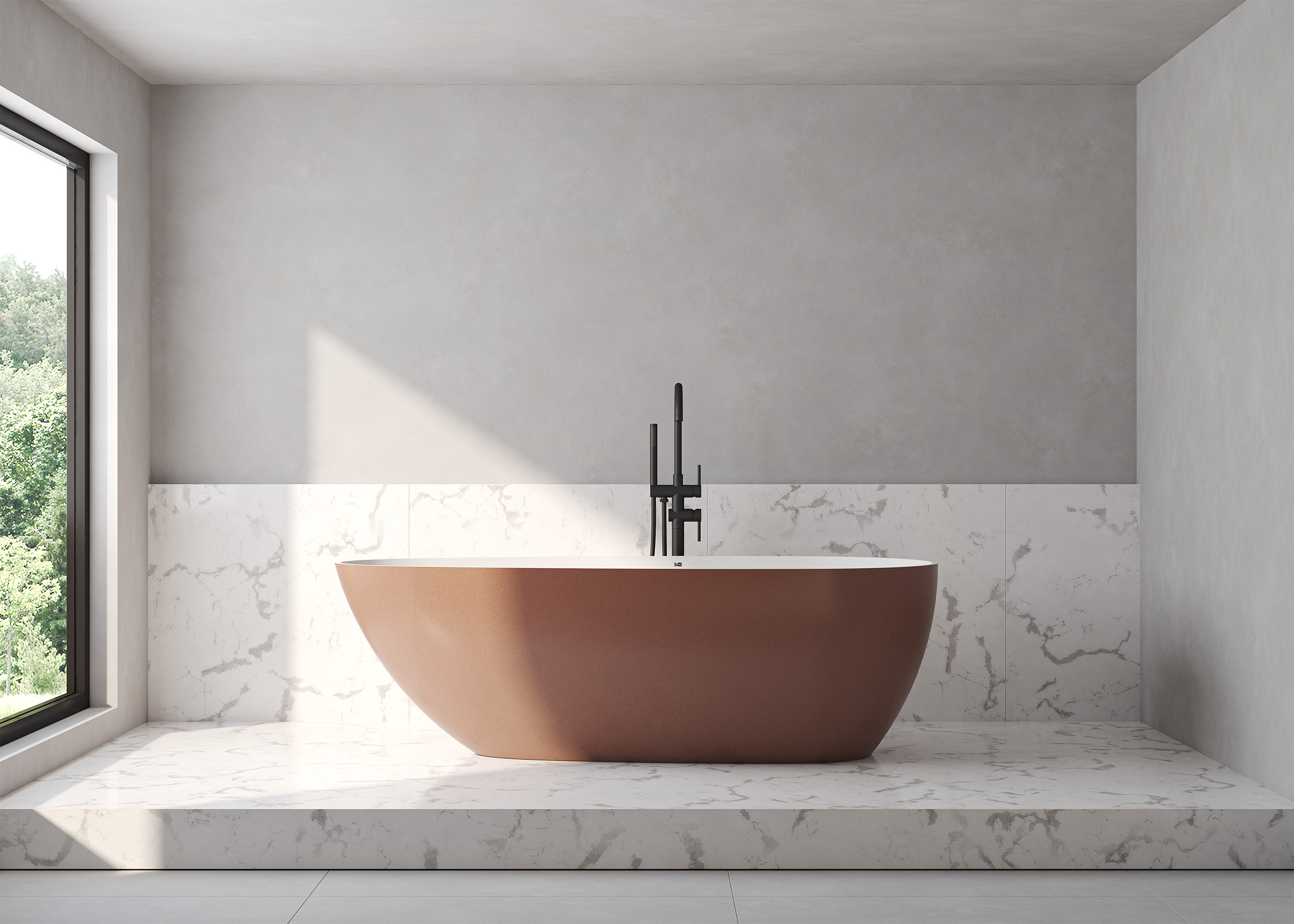
Materials are no longer chosen solely for their technical performance. They also determine how light interacts with the surface and how the bathtub relates to the other materials within the bathroom.
In recent years, matt surfaces and seamless finishes have gained prominence thanks to their ability to integrate naturally into contemporary architectural projects.
Alongside this, another increasingly established trend is colour customisation. The possibility of producing a bathtub in any RAL colour allows colour itself to become an architectural resource, whether the objective is complete visual integration or to make the bathtub the defining feature of the space.
Designing as a whole
Designing a bathroom is not about introducing individual elements in isolation, but about creating a coherent relationship between space, materials, light and proportions. The bathtub forms part of that balance and, when integrated from the earliest stages of the project, helps define the identity of the whole.
Beyond fulfilling a functional purpose, its position, geometry and materiality actively influence the way the space is perceived and experienced. Because the architecture of a bathroom is not created through independent elements, but through the relationships established between them.